
Nutritional Benefits and Values of Sea Buckthorn Juice
Updated: 2 days ago
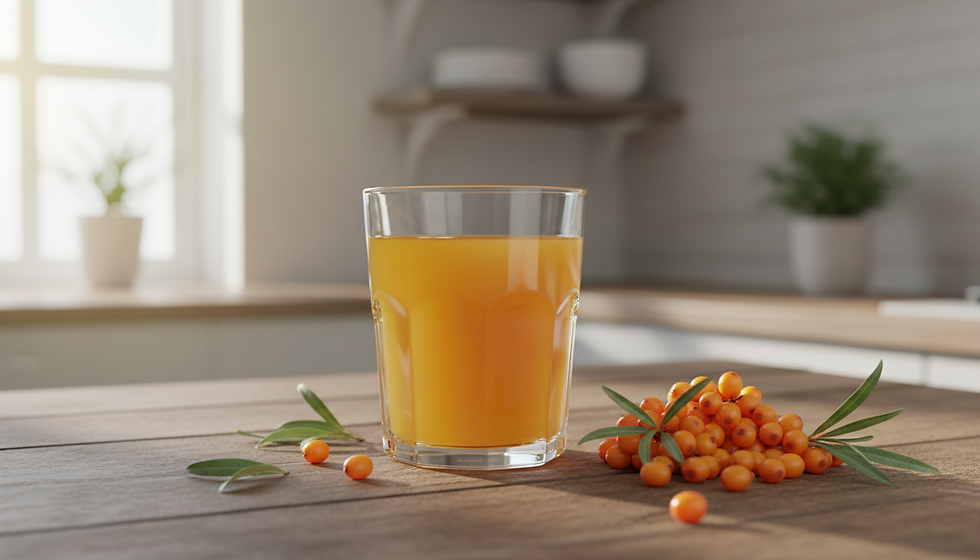
Sea buckthorn juice is the kind of drink that makes you sit up a little. It’s sharp, bright, and sour, reminiscent of amla or citrus rather than a sweet fruit juice. That tangy punch is also a clue to why people are curious about it. Sea buckthorn berries are naturally rich in useful nutrients, especially vitamin C and plant compounds that give the berries their deep orange color.
If you’re looking at it for everyday wellness, the main thing to know is simple. Sea buckthorn juice can be a nutrient-dense addition to your diet, but it’s not a magic fix. Its value comes from what’s naturally in the fruit, how it’s processed, and whether the bottle has added sugar, preservatives, or very little real pulp.

What Sea Buckthorn Juice Is Made From
Sea buckthorn is a small orange berry that grows on a hardy shrub. The berries are tart, slightly bitter, and aromatic. Because they’re so sour, the juice is often diluted with water or blended with other ingredients.
Pure sea buckthorn juice usually comes from pressed berries. Some versions keep more pulp, while others are filtered until they’re smoother. That makes a difference because pulp can carry extra plant compounds, color pigments, and a little fiber.
A good bottle should taste naturally sharp. If it tastes like a typical sweet fruit drink, check the label. It may contain added sugar or a small amount of sea buckthorn mixed into a sweeter base.
The best way to judge any bottle is to look for:
High fruit content
No added sugar, or very little
Clear nutrition information per 100 ml
Minimal ingredients
A tart flavor that feels natural, not candy-like
If you’re comparing options such as Reviv Sea Buckthorn Juice, use the same label checks. The name matters less than the ingredient list and nutrition panel.
The Key Nutritional Values in Sea Buckthorn Juice
The exact values can vary a lot. Variety, growing region, harvest time, ripeness, and processing all affect the final nutrition. Still, sea buckthorn is known for a few standout nutrients.
Here’s a simple way to understand what you’re getting.
| Nutrient or Compound | What It Does in the Body | What to Check on the Label |
|----------------------|--------------------------|-----------------------------|
| Vitamin C | Supports normal immune function, skin health, and iron absorption | Listed as vitamin C or ascorbic acid |
| Carotenoids | Natural orange pigments that act as protective plant compounds | Usually not listed, but deeper color may suggest more fruit content |
| Vitamin E | Helps protect cells from everyday stress | Sometimes listed if tested |
| Plant Polyphenols| Found naturally in many fruits and berries | Rarely listed on standard labels |
| Natural Fruit Acids | Give the juice its sharp, sour taste | Reflected in tartness, not always listed |
| Small Amounts of Minerals | May include potassium and other minerals | Check the nutrition panel |
| Natural Sugars | Come from the fruit itself | Listed as carbohydrates or sugars |
| Fibre | Usually low in clear juice, higher if pulpy | Check whether fibre is listed |
A typical serving is usually small because the flavor is intense. Many people take it diluted rather than drinking a full glass straight. That also keeps the sourness easier on the stomach.
Why Vitamin C Is the Headline Nutrient
Vitamin C is probably the biggest reason sea buckthorn gets attention. The berries are naturally rich in it, and the juice can be a useful source when handled well.
Vitamin C helps with:
Normal immune system function
Collagen formation, which supports skin, gums, bones, and blood vessels
Better absorption of iron from plant foods
Protection of cells from everyday damage linked to normal body processes
That doesn’t mean more is always better. Your body uses what it needs and gets rid of excess through urine. So the aim isn’t to drink large amounts. It’s to include vitamin C-rich foods regularly, across the week.
If you follow a vegetarian diet, this can be especially useful. Having a vitamin C-rich drink with meals that include lentils, beans, spinach, or millets may help your body absorb more iron from those plant foods.
One easy example in an Indian kitchen:
A small diluted serving with poha, upma, or dal-based meals
A splash stirred into water after breakfast
A small shot mixed with plain water before a meal
Keep it simple. You don’t need to turn it into a ritual.

The Orange Colour Tells You Something Too
That deep golden-orange color isn’t just pretty. It comes from natural pigments called carotenoids. These are found in foods like carrots, pumpkin, mangoes, and orange berries.
Carotenoids are linked with eye and skin health because some of them help the body make vitamin A. They also act as protective plant compounds. Sea buckthorn’s color can be a good visual hint that the juice contains these natural pigments, especially if it’s made with pulp.
But color alone isn’t proof of quality. A very bright drink could also be colored or sweetened. That’s why the ingredient list still matters.
Look for words like:
Sea buckthorn juice
Sea buckthorn pulp
Sea buckthorn berry extract, if clearly explained
Water, if it’s a diluted drink
Be more cautious if the first ingredients are sugar, syrup, or vague fruit flavors.
Sea Buckthorn Has an Unusual Fat Profile for a Berry
Here’s where sea buckthorn gets interesting. Most fruit juices don’t offer much in the way of fats. Sea buckthorn berries, especially the pulp and seeds, naturally contain beneficial fatty acids.
You may have heard of omega fats. They’re types of fat the body uses for cell structure, skin barrier function, and many normal body processes. Sea buckthorn is often talked about because its berry pulp contains a rare plant-based fatty acid called omega-7.
Now, this needs a bit of common sense.
Clear juice may not contain much fat because fat is more concentrated in the pulp and seed oil. A pulpy juice may carry more than a filtered juice, but it still won’t be the same as a concentrated oil.
So, if your goal is to get the full berry profile, choose a version that keeps more pulp. Shake the bottle if the label says to do so, since natural pulp can settle at the bottom.
It May Support Skin Health as Part of a Balanced Diet
Sea buckthorn is often linked with skin, and there’s a good reason. It contains nutrients that relate to normal skin function, including vitamin C, vitamin E, carotenoids, and fatty acids in the whole berry.
Vitamin C helps the body form collagen. Vitamin E and carotenoids help protect cells. Fatty acids support the skin’s natural barrier. Together, these make sea buckthorn a sensible food to include if you care about skin health.
Still, be careful with expectations. A juice won’t replace sleep, hydration, sunscreen, or a balanced diet. It also won’t treat skin conditions. Think of it as one useful ingredient, not the whole plan.
A practical skin-friendly plate might include:
Protein from dal, curd, eggs, paneer, fish, tofu, or beans
Colorful vegetables
Nuts or seeds
Enough water
A small serving of a vitamin C-rich food or drink
That’s where Sea Buckthorn Juice can fit nicely.

How to Read the Nutrition Label Without Getting Confused
Nutrition labels can feel more complicated than they need to be. For sea buckthorn, focus on a few details.
Check the Serving Size
Some labels show values per 100 ml. Others show values per serving. If the serving is only 20 ml or 30 ml, the numbers may look small. Compare per 100 ml when you can.
Watch the Sugar
Sea buckthorn is naturally tart, so some drinks add sugar to soften the taste. A little sweetness may be fine, but if sugar is near the top of the ingredient list, you’re getting more of a sweet drink than a nutrient-rich juice.
Natural fruit sugars are listed on the nutrition panel too. So don’t panic if you see some sugar. Just check whether it’s naturally present or added.
Look at Vitamin C
If the label lists vitamin C, that’s useful. If it doesn’t, the juice may still contain it, but you won’t know how much. Heat and storage can reduce vitamin C over time, so fresher, well-sealed juice usually makes more sense.
Check the Ingredient List
Shorter is often better. Sea buckthorn juice or pulp should be the main ingredient. Water is fine if it’s meant to be diluted. Added colors or strong artificial flavors are less appealing if you want the berry’s natural nutrition.
How Much Should You Drink?
Because sea buckthorn juice is sour and strong, small amounts are usually enough. Many people start with 15 ml to 30 ml diluted in water, then adjust based on taste and comfort.
You can try it:
Mixed with plain water
Added to coconut water
Stirred into curd or a smoothie
Mixed with warm water, not boiling water
Added to salad dressing with olive oil, salt, and herbs
Avoid boiling it if you’re drinking it for vitamin C, since heat can reduce heat-sensitive nutrients.
If you’re new to it, don’t start with a large glass. A smaller diluted serving is easier on your teeth and stomach.
A Quick Note on Acidity and Teeth
Sea buckthorn juice is acidic. That’s part of its charm, but it also means you should treat it like lemon juice or other sour drinks.
Helpful habits include:
Dilute it with water
Drink it with a meal
Use a straw if you drink it often
Rinse your mouth with plain water afterwards
Wait a little before brushing your teeth
This is simple tooth-friendly stuff. No need to overthink it.
Who Should Be a Little Careful?
For most healthy adults, modest amounts of sea buckthorn juice as food are generally fine. Still, some people should be more cautious.
Speak with a qualified health professional first if you:
Are pregnant or breastfeeding
Take regular medicines
Have a medical condition
Have a sensitive stomach or frequent acidity
Are managing blood sugar closely
Have allergies to berries or similar foods
This article is for general information only. It isn’t medical advice, and it shouldn’t replace guidance from a doctor or dietitian.

Frequently Asked Questions
Is Sea Buckthorn Juice High in Vitamin C?
Yes, sea buckthorn berries are naturally known for their vitamin C content. The exact amount in juice depends on the berry variety, processing, storage, and whether the label has tested values.
Can I Drink Sea Buckthorn Juice Every Day?
You can include a small diluted serving as part of a balanced diet if it suits your stomach. Start small, especially because it’s acidic and tart.
Is It Better to Drink It Straight or Diluted?
Diluted is usually better. It tastes smoother, feels gentler on the stomach, and is kinder to your teeth.
Does Sea Buckthorn Juice Contain Omega Fats?
The whole berry, especially the pulp and seeds, contains beneficial fatty acids. Clear juice may contain very little, while pulpy versions may retain more.
Is Sea Buckthorn Juice Good for Skin?
It contains nutrients linked with normal skin health, such as vitamin C, carotenoids, vitamin E, and berry fatty acids. It can support a good diet, but it won’t replace skincare, sleep, hydration, or medical care when needed.
The Simple Takeaway
Sea buckthorn juice earns its place because it packs a lot into a small, tart serving. Its biggest strengths are vitamin C, bright orange plant compounds, and the wider nutrient profile of the berry, especially when pulp is included.
For the best choice, read the label. Pick a juice with real sea buckthorn, little or no added sugar, and clear nutrition information. Drink it diluted, keep the serving modest, and treat it as part of your everyday food routine rather than a cure-all. That’s where it makes the most sense.


Comments